

SUNLINERS
ANYTIME ANYPLACE
STRIKE FIGHTER SQUADRON 81 COMMAND HISTORY
On February 4th, 1988, VA-81 transitioned to the McDonnell-Douglas FA-18C Hornet, becoming Strike Fighter Squadron EIGHT-ONE (VFA-81). Along with the new aircraft, the squadron adopted the current squadron logo and patches that Sunliners wear today.
On August 7th, 1990, Sunliners deployed once again with CVW-17 aboard Saratoga for their first FA-18C Hornet cruise and their first mission as a strike fighter squadron. This deployment took place one week after Iraq had invaded Kuwait, and VFA-81 actively participated in both OPERATION DESERT SHIELD and later OPERATION DESERT STORM as part of the Red Sea Battle Force. On January 17th, 1991, VFA-81 participated in some of the first carrier-based strikes of the Persian Gulf War.
The first division of Sunliners to enter combat succeeded in proving the strike fighter concept by successfully engaging in both air-to-air and air-to-ground engagement in the same flight. As three VFA-81 and one VFA-83 Rampager aircraft flew into Iraq on CVW-17's first daylight strike of the war, they were confronted by two Iraqi Mig-21s. Sunliner LCDR Mark "MRT" Fox, and LT Nick "Mongo" Mongillo each downed one enemy aircraft before proceeding to and destroying their target. These were the Navy's only two aerial victories of the war.
In reality VFA-81 and VFA-83 were long standing squadrons in CVW-17, having deployed with CVW-17 since the early 80s and transitioning to the legacy hornet from the A-7.
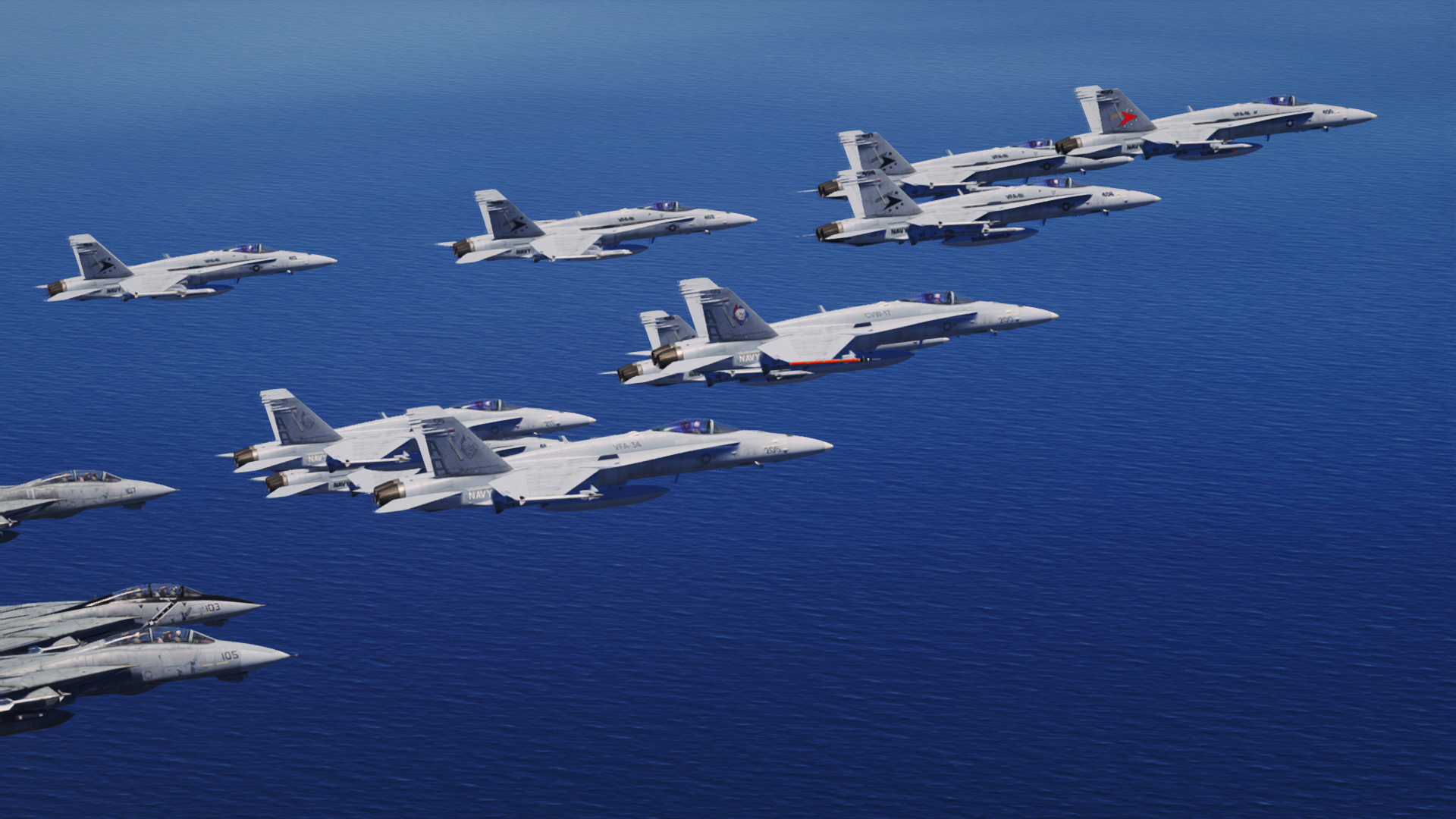
Within Virtual Carrier Air Wing 17 VFA-81 represents the youngest squadron assigned to the Airwing, being officially stood up in early 2025.
Within CVW-17 and Navy air wings more generally none of the Squadrons hold any particular specalisations. All squadrons Hornets and Tomcats train to the same tactics and standards. However there are so called “SME Squadrons” whose leadership holds a certain expertise in a mission set, that they provide when required. For VFA-81 the SME role for CAS is currently held.
VFA-81 has participated in Operation Resolute Passage in 2025 and most recently in Operation Omani Freedom in 2026.
-
The Commanding Officer of VFA-34 approaches leadership with a strong emphasis on preparation, continuous improvement, and developing the people around him. After years of flying across a variety of aircraft in DCS, he joined vCVW-17 seeking a more challenging environment in which realistic procedures, disciplined execution, and teamwork were central to mission success. As Commanding Officer of the “Blue Blasters,” he works to foster a squadron culture where members are encouraged to challenge themselves, learn from mistakes, and actively contribute to the development of their fellow aviators. He believes that demanding missions are most rewarding when the squadron has invested the time and effort necessary to execute them well. His leadership philosophy emphasizes thorough preparation, constructive feedback, mentorship, and personal accountability while maintaining an environment in which members enjoy the process of learning and improving. His goal for VFA-34 is not simply to successfully complete assigned missions, but to continually develop more capable virtual naval aviators, stronger teammates, and a better squadron. A lifelong aviation enthusiast, he continues to approach DCS with the same curiosity that originally drew him to military aviation - although he maintains that Iron Eagle was, objectively, a horrible movie.
-


VFA-81 MISSIONS
-
In Close Air Support missions, VFA-34’s F/A-18C Hornets provide timely and precise firepower to support ground forces. With versatile weapons loadouts and the ability to quickly acquire targets using ATFLIR, VFA-34 can adapt to dynamic ground scenarios, delivering ordnance with high accuracy to support JTACs and ground commanders.
-
"Bombs on Target, On Time" is VFA-34's mantra for strike missions. Equipped with advanced targeting systems like the AN/ASQ-228 ATFLIR, VFA-34’s F/A-18C Hornets can accurately deliver precision-guided munitions, including laser-guided and GPS-guided bombs, ensuring effective strikes in support of mission objectives.
-
During Offensive Counter Air (OCA) missions, VFA-34 provides sweep and escort for strike packages, enhancing air superiority in hostile airspace. The F/A-18C’s agility, powerful radar, and air-to-air missile capabilities enable VFA-34 to clear threats and protect high-value assets, ensuring mission success in contested environments.
-
In War at Sea missions (WAS), VFA-34’s F/A-18C Hornets are equipped with the AGM-84 Harpoon missile to engage surface threats at long range. Leveraging the Harpoon’s sea-skimming flight profile and precision targeting, VFA-34 can effectively strike enemy ships, neutralizing high-value maritime targets and contributing to naval superiority in contested waters.
-
VFA-34 plays a key role in SEAD missions, using the F/A-18C’s capabilities to neutralize enemy radar and missile systems. Armed with AGM-88 HARM missiles, the Hornets can locate and suppress hostile air defenses, paving the way for friendly aircraft and enabling safe access to contested airspace.